Eptacog beta relieved pain at 12 and 24 hours in patients with hemophilia with inhibitors, according to research presented at the ASH Annual Meeting. The analysis also showed that patients with high levels of pain related to bleeding episodes required larger declines in pain than those with mild pain to reach a clinically meaningful effect and discontinue treatment.
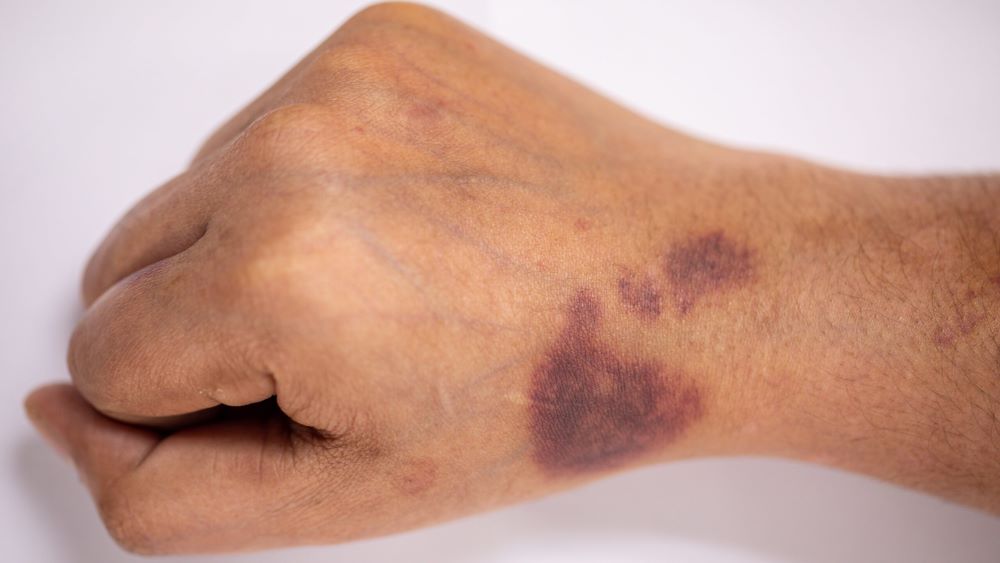
“Joint and muscle bleeds cause acute pain in persons with hemophilia. Assessment of pain … is important in guiding the management of bleeding episodes, as the onset of acute pain often signals the start of joint or soft-tissue bleeding episodes and the need for treatment,” wrote the authors, led by Tyler W. Buckner, MD, MSc,of the Hemophilia and Thrombosis Center at the University of Colorado School of Medicine in Aurora, Colorado. “In addition, pain relief can indicate bleed resolution and motivate a decision to end treatment.”
The researchers sought to assess the effects of eptacog beta on pain, which the U.S. Food and Drug Administration approved for the on-demand control of bleeding episodes in people with hemophilia A or B with inhibitors (HABI). Their work was a post-hoc analysis of the PERSEPT 1 trial, which included 468 bleeding episodes in 27 male patients 12 years or older (five adolescents and 22 adults). Patients received eptacog beta at either 75 or 225 µg/kg.
Pain was measured at bleeding onset and predetermined times via a visual analog scale (VAS), with 0 representing no pain and 100 representing the worst pain possible. Patients in both age groups and dose levels reported pain relief 12 hours after initial eptacog beta infusion. Further declines in pain were observed at 24 hours. Mean VAS pain scores at baseline ranged from 26.5 (standard deviation [SD]=22.1) to 45.3 (SD=25.2), depending on the age and dose subgroup. At 12 hours, those values dropped from 1.1 (SD=5.4) to 11.2 (SD=18.1). At 24 hours, pain scores decreased again, ranging from 0.0 (SD=0.0) to 3.8 (SD=9.4).
The researchers also found that patients with high baseline pain related to bleeding episodes required larger declines in VAS scores to achieve clinically meaningful pain relief and make the decision to discontinue treatment.
“Our findings provide new benchmark measurements of clinically relevant pain relief in HABI,” the authors concluded.
https://ash.confex.com/ash/2024/webprogram/Paper194935.html
Reference
Buckner TW, Kessler C, Castaman G, et al. Pain reduction following treatment of bleeding episodes with eptacog beta in adults and adolescents with hemophilia A or B complicated by inhibitors. Abstract #3972. Presented at the 66th American Society of Hematology Annual Meeting and Exposition; December 7–10, 2024; San Diego, California.